
Samurai Sudoku Rules: How to Solve the 21x21 Five-Grid Puzzle
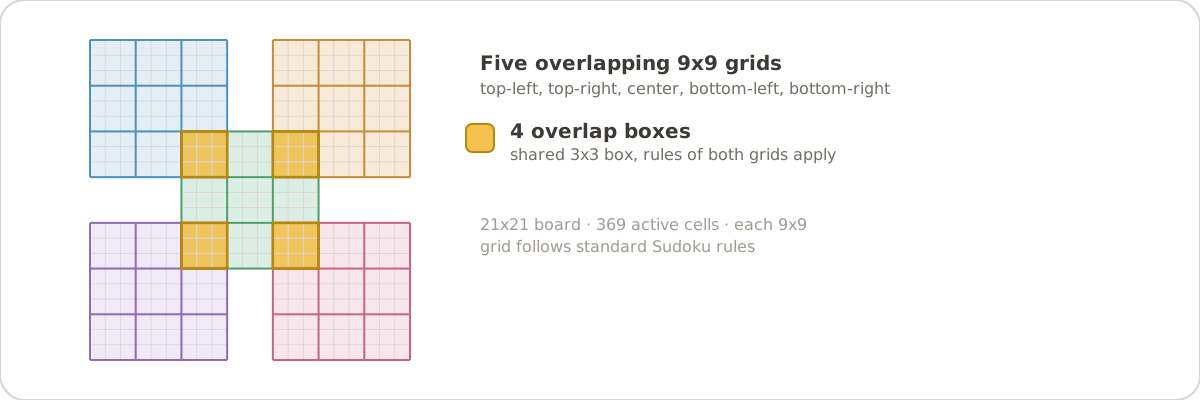
Samurai Sudoku takes five ordinary 9x9 Sudoku grids and fuses them into one giant 21x21 board, with each corner grid sharing a 3x3 box with the grid in the middle. Nothing about the rules within any single grid changes — the size and the four shared boxes are the entire difference. This guide covers the full rule set, walks through how the overlap boxes work, and answers the questions solvers ask most before tackling their first one.
The board
A Samurai Sudoku board is 21 cells wide and 21 cells tall, arranged as five 9x9 grids in a cross (or quincunx) pattern: one grid in each corner — top-left, top-right, bottom-left, bottom-right — and one grid dead center. Each corner grid overlaps the center grid by exactly one 3x3 box, which is what stitches the five grids into a single connected puzzle rather than five unrelated ones. The cells outside all five grids are inactive space and aren't part of the puzzle.
The rules: five ordinary grids, four shared boxes
Every one of the five 9x9 grids follows the exact same rules as Classic Sudoku, entirely on its own:
- • Each row within a grid contains 1–9 exactly once — no repeats.
- • Each column within a grid contains 1–9 exactly once — no repeats.
- • Each 3x3 box within a grid contains 1–9 exactly once — no repeats.
The one twist: the four gold-highlighted boxes in the image above sit inside two grids at once. A corner grid's inner 3x3 box is literally the same 9 cells as one of the center grid's boxes — not a copy, the identical cells — so every digit placed there has to satisfy the row, column, and box rules of both grids at the same time. That shared constraint is the entire mechanic that makes Samurai Sudoku one connected puzzle instead of five separate ones.
A worked example: solving through the overlap
Picture the top-left grid nearly solved, with just its shared box (the one overlapping the center grid) still partly empty. Because that box's cells belong to the top-left grid, you can narrow their candidates using the top-left grid's rows, columns, and box — the normal way. But those same cells are also part of the center grid's top-left box, which means you can also narrow them using whatever's already placed in the center grid's rows and columns.
In practice, that means a cell in an overlap box can get solved from either direction — and once it is, the digit you just placed becomes a new clue for the other grid too, often unlocking progress there. Checking both grids whenever you touch an overlap cell is the one habit that's genuinely new to Samurai Sudoku; every other technique, from scanning to naked pairs, is the same one you'd use on a single 9x9 grid. See our solving techniques guide for the full method list.
How big is a Samurai Sudoku puzzle?
Five 9x9 grids would add up to 405 cells if they were separate, but the four shared 3x3 boxes (36 cells total) are each counted only once, since they're the same physical cells for both grids involved. That leaves 369 active cells on the 21x21 board — the number you're actually solving for, with the remaining board space simply inactive.
Difficulty levels
Difficulty is set by how many of the 369 active cells are given as starting clues:
Easy
219 of 369 clues
A gentle introduction
Medium
169 of 369 clues
A solid challenge
Hard
129 of 369 clues
Advanced techniques across all five grids
Common rule mix-ups
- • Treating the five grids as fully independent — the four overlap boxes link them; a digit placed in a shared box affects both grids it belongs to.
- • Forgetting an overlap cell has two sets of row/column neighbors — a cell in a shared box is checked against the rows and columns of whichever grid you're currently reasoning about, and both are valid at once.
- • Assuming the whole 21x21 board is active — only 369 of the 441 cells belong to one of the five grids; the rest is empty space with no rule attached.
- • Expecting a fifth kind of rule — there isn't one. Every constraint in Samurai Sudoku is an ordinary row, column, or 3x3 box rule; the only new idea is that four boxes happen to belong to two grids.
Ready to take on all five grids at once? Start with Easy to get a feel for the overlap boxes.
Play Samurai SudokuFrequently asked questions
What are the rules of Samurai Sudoku?
Samurai Sudoku is five overlapping 9x9 Sudoku grids arranged in a cross on a 21x21 board. Each of the five grids follows standard Sudoku rules on its own — every row, column, and 3x3 box within that grid contains 1-9 exactly once — and the four corner grids each share one 3x3 box with the center grid.
How do the overlapping boxes work in Samurai Sudoku?
Each corner grid (top-left, top-right, bottom-left, bottom-right) shares one 3x3 box with the center grid. The 9 cells in that shared box belong to two grids at once, so every digit placed there has to satisfy the row, column, and box rules of both grids simultaneously, not just one.
How many active cells does a Samurai Sudoku puzzle have?
369. Five 9x9 grids would total 405 cells, but the four shared 3x3 boxes (36 cells total) are only counted once, giving 405 minus 36 equals 369 unique active cells. The rest of the 21x21 board is inactive space between the grids.
Is Samurai Sudoku just five separate puzzles?
Not quite. Each grid does follow the ordinary rules on its own, but the four shared boxes link every corner grid to the center grid, so a deduction in one grid can force a digit in another. You can't fully solve the puzzle by treating the five grids as independent.
How many clues does a Samurai Sudoku puzzle start with?
Easy starts with 219 of the 369 active cells filled in, Medium with 169, and Hard with just 129 — considerably more raw clues than a single 9x9 grid, since there's simply a lot more board to fill.
Is Samurai Sudoku harder than Classic Sudoku?
Yes, mainly because of its size and the linked overlap boxes rather than any single rule being more complex. There's more board to track at once, and progress in one grid frequently depends on what the overlap boxes force from a neighboring grid.
Keep reading
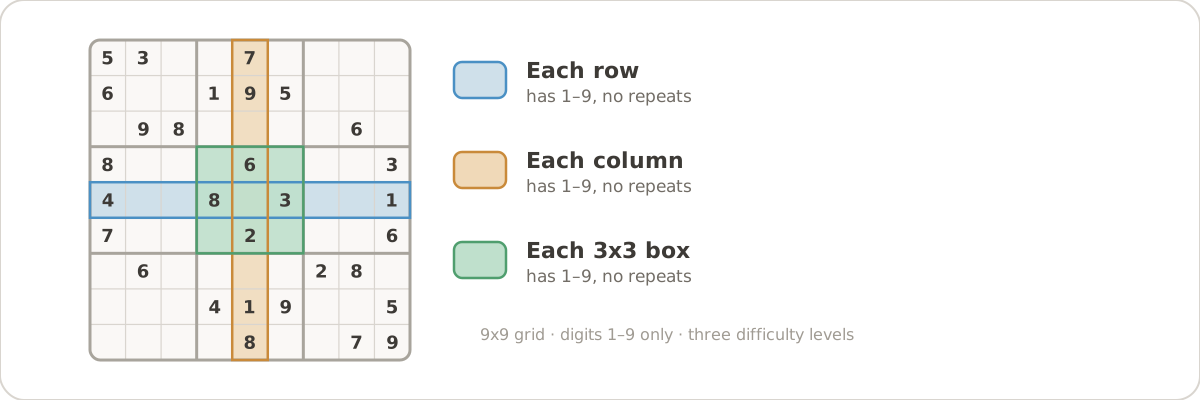
Classic Sudoku Rules: How to Play 9x9 Sudoku Step by Step
The single-grid rules every one of Samurai Sudoku's five grids follows.
Read more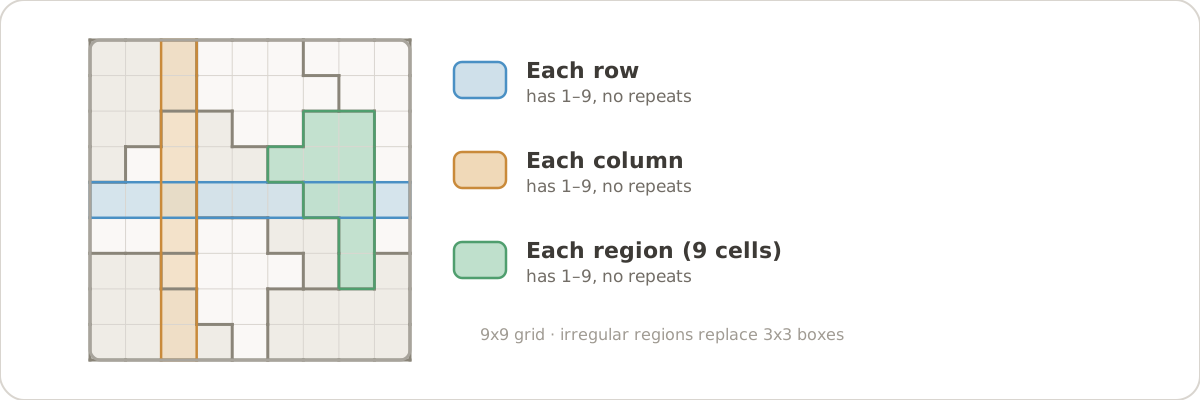
Jigsaw Sudoku Rules: How Irregular Regions Work
Another structural twist on the standard rules, with irregular regions instead of overlapping grids.
Read more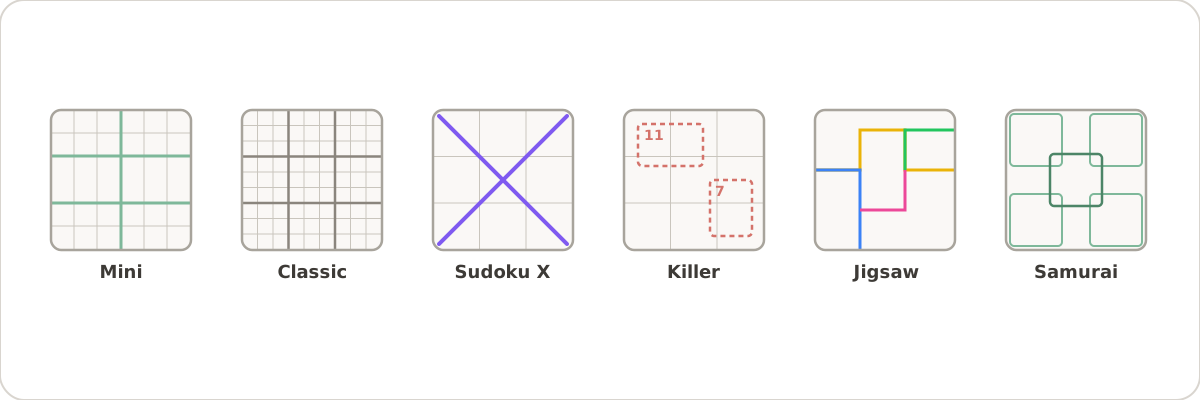
Mini vs Classic vs Killer vs Jigsaw vs Samurai Sudoku: Which Should You Play?
A side-by-side comparison of every Sudoku variant we offer.
Read more