
Mini vs Classic vs Killer vs Jigsaw vs Samurai Sudoku: Which Should You Play?
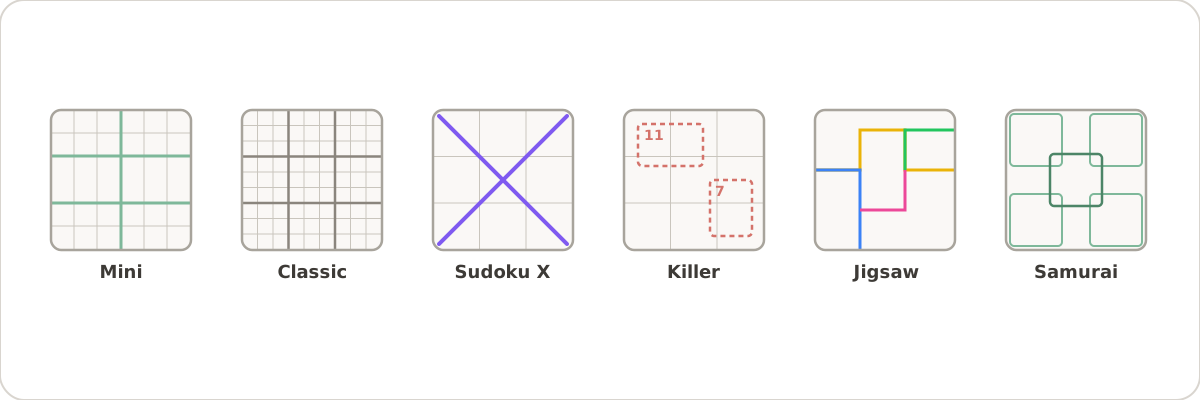
"Sudoku" isn't one puzzle — it's a family of them. They all share the same core rule (no repeated numbers in a row, column, or region), but the grid size, the extra constraints, and the mental muscles they exercise vary a lot. This guide breaks down all six variants we offer: how hard each one really gets at its top difficulty tier, which solving techniques you'll actually need, who each format suits best, and how much time to set aside. Read the full breakdown below, or jump straight to the quick answer if you just want a starting point.
Quick answer: which one should you play tonight?
- • New to Sudoku, or want a puzzle that fits a coffee break → Mini Sudoku
- • Want the puzzle you already know from newspapers → Classic Sudoku
- • Comfortable with Classic and want it sharper, same format → Sudoku X
- • You enjoy arithmetic as much as logic → Killer Sudoku
- • You like re-learning the board on every puzzle → Jigsaw Sudoku
- • You have a free afternoon and want an immersive challenge → Samurai Sudoku
Mini Sudoku (6x6) — best for a quick break or learning the ropes
A 6x6 grid split into 2x3 boxes, filled with numbers 1–6. It uses the exact same core logic as full-size Sudoku, just with a third of the cells to track, so even our hardest Mini puzzles rarely take more than a few minutes. That makes it the easiest on-ramp if you're new to Sudoku — or if you're teaching a kid, since fewer numbers means less to memorize while the rules stay identical to every other variant on this page.
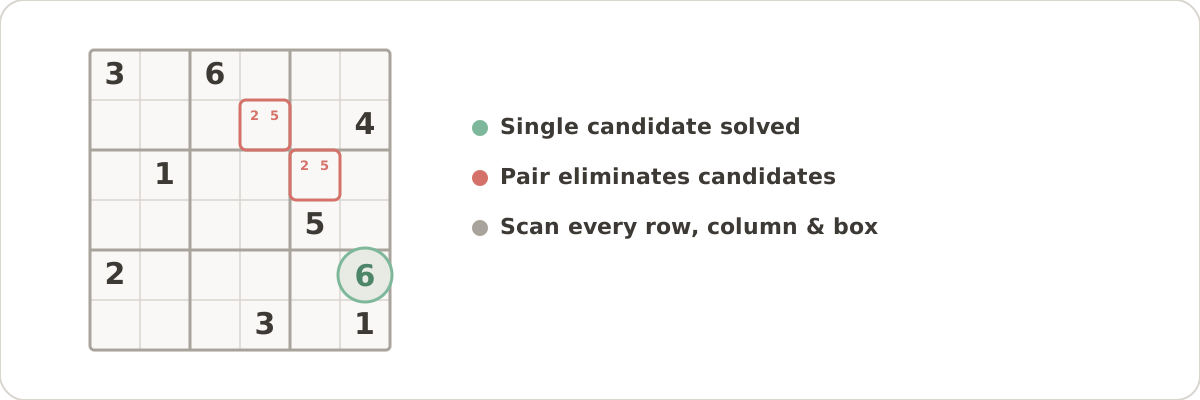
Basic scanning and naked singles get you through Easy and most Medium puzzles here. Hard mode is where naked pairs (covered in our solving techniques guide) start to matter, since a 6x6 grid runs out of "obvious" moves faster than a 9x9 one. The most common beginner mistake is skipping pencil marks because the grid looks small — do it anyway once you hit Hard, or you'll lose track of which numbers are actually still possible in a box. Play the daily puzzle or grind difficulty levels in Unlimited mode.
Classic Sudoku (9x9) — the standard everyone knows
The 9x9 grid with 3x3 boxes and digits 1–9 is the version printed in newspapers worldwide, and it's meaningfully harder than Mini Sudoku simply because there's three times the board to track. Easy and Medium puzzles are still mostly scanning and singles, but Hard puzzles reliably need naked pairs, pointing pairs, and careful pencil-mark discipline — the extra techniques in our solving techniques guide stop being optional and start being the only way through.
If you've mastered Mini Sudoku and want the "real" challenge, this is the natural next step: same rules, just enough extra rows, columns, and boxes to make guessing a bad strategy and systematic elimination the only reliable one. Every other variant on this page assumes you already know Classic, so it's worth spending real time here before branching out.
Sudoku X — Classic Sudoku plus two extra rules
Same 9x9 grid, same digits 1–9, but the two main diagonals must also contain 1–9 with no repeats. Those two extra lines sound minor, but they're genuinely useful: a diagonal constraint eliminates candidates that plain rows, columns, and boxes can't touch, so a well-placed diagonal check can crack a cell that looks stuck under Classic rules alone.
Because of that extra information, Sudoku X puzzles at a given difficulty often start with about as many clues as Classic — the challenge isn't fewer numbers, it's remembering to check two more lines on every move. The easiest way in is to physically trace both diagonals before you start scanning normally, so checking them becomes a habit rather than something you bolt on after getting stuck. Good pick if Classic Sudoku has started to feel routine and you want the same format with a sharper edge, without learning an entirely new rule set.
Killer Sudoku — Sudoku meets arithmetic
No starting clues at all. Instead, the grid is divided into "cages" — groups of cells outlined by a dashed border, each labeled with a target sum. The digits inside a cage must add up to that number and can't repeat, so you're solving two puzzles at once: the normal Sudoku placement logic, plus the arithmetic of which digit combinations can actually fit a cage of a given size and sum.
Small cages (two or three cells) are the best place to start, since a sum like 4 in a two-cell cage only has one possible combination (1+3). Hard puzzles lean on larger cages with several valid combinations, which is where cross-referencing a cage against its row, column, and box really pays off — pure arithmetic without that cross-check will leave you guessing. It rewards a different kind of thinking than the other variants and is a favorite for players who like Sudoku but want more math worked in.
Jigsaw Sudoku — when the boxes aren't boxes
The rows and columns still each need 1–9, but the nine 3x3 boxes are replaced with nine irregularly-shaped regions that tile the grid like puzzle pieces. Because the regions aren't neat squares, your usual "which box is this cell in" instincts don't apply — you have to actually trace the region's outline on every move, especially near where two regions interlock.
The core techniques are identical to Classic Sudoku — scanning, singles, pairs — so if you already know those, you already know how to solve Jigsaw. The difficulty is entirely spatial, not logical. New players usually lose the most time to misreading a region boundary near a corner; it's worth tracing the full outline of the two or three regions you're actively working before committing to a placement. It's disorienting at first and genuinely satisfying once it clicks.
Samurai Sudoku — five puzzles, one grid
Five overlapping 9x9 grids arranged in an X, sharing corner boxes with each other. It looks intimidating, but each of the five sub-grids follows normal Classic Sudoku rules — the challenge is that the shared corners must satisfy two grids' constraints simultaneously, and progress in one grid can unlock moves in another that looked stuck.
Because it's really five 9x9 puzzles, the total solve covers far more cells than any other variant here, even at the easiest difficulty — the individual logic never gets harder than Classic Sudoku, but there's a lot more of it. A solid approach is to work the four outer grids largely independently first, since each only shares one corner with the center, then use whatever's locked in those corners to crack the center grid last. Give yourself real time for this one; it's built for players who want a long, immersive session rather than a quick break — closer to a weekend project than a coffee break.
Quick comparison
| Variant | Grid | Difficulty | Skills needed |
|---|---|---|---|
| Mini Sudoku | 6x6 | ★☆☆☆☆ | Basic scanning, singles |
| Classic Sudoku | 9x9 | ★★☆☆☆ | Scanning, singles, pairs |
| Sudoku X | 9x9 + diagonals | ★★★☆☆ | Classic skills + diagonal checks |
| Killer Sudoku | 9x9 + cages | ★★★★☆ | Elimination + cage arithmetic |
| Jigsaw Sudoku | 9x9, irregular regions | ★★★☆☆ | Classic skills + region tracing |
| Samurai Sudoku | 21x21 (5 overlapping grids) | ★★★★☆ | Classic skills, sustained across 5 grids |
Frequently asked questions
What's the easiest Sudoku variant for beginners?
Mini Sudoku (6x6). It uses the same rules as every other variant but with a third of the cells, so basic scanning and singles solve most puzzles in a few minutes — the fastest way to learn the core logic before moving to a 9x9 grid.
What's the hardest Sudoku variant?
It depends what you mean by hardest. Killer Sudoku is the most demanding per cell, since it adds cage arithmetic on top of standard elimination with zero starting clues. Samurai Sudoku is the biggest time commitment, since it's really five 9x9 puzzles linked together — but no single cell in it is logically harder than a Classic Sudoku cell.
Is Killer Sudoku harder than Classic Sudoku?
Yes. It requires an extra skill (cage-sum arithmetic) that Classic never asks for, and it gives no starting digits at all. Someone who has only solved Classic Sudoku will likely find Killer's Easy tier feels closer to Classic's Hard tier at first.
What age is Mini Sudoku good for?
Mini Sudoku's 1–6 range and smaller grid make it accessible to kids roughly 6 and up who already know their numbers, while still being a genuinely enjoyable quick-break puzzle for adults — difficulty scales through the same Easy, Medium, and Hard tiers as our other variants.
Do all Sudoku variants use the same solving techniques?
The foundation — scanning, naked singles, hidden singles, naked and pointing pairs — applies everywhere. Each variant adds exactly one extra skill on top: Sudoku X adds diagonal-awareness, Jigsaw adds region-tracing, Killer adds cage arithmetic, and Samurai adds tracking which sub-grid a shared cell belongs to.
Should I master Classic Sudoku before trying the variants?
It helps but isn't required. Sudoku X and Jigsaw are close enough to Classic that you can learn them directly. Killer and Samurai are easier to pick up once Classic's core techniques are second nature, since both add a layer on top of that baseline rather than replacing it.
There's no wrong place to start — all six are free and playable instantly, with no account or download required. If you're brand new, start with Mini Sudoku; if you already know Classic Sudoku inside out, Killer or Samurai will give you the most new ground to cover. And whichever you pick, a daily habit is what actually builds the skills above — consistency matters more than which variant you start with.
Keep reading
Sudoku Solving Techniques: A Complete Guide From Beginner to Advanced
The techniques that actually solve puzzles, from basic scanning to the X-Wing.
Read more
The Benefits of Playing Sudoku Every Day
What a daily puzzle habit actually does for your focus, memory, and stress levels.
Read more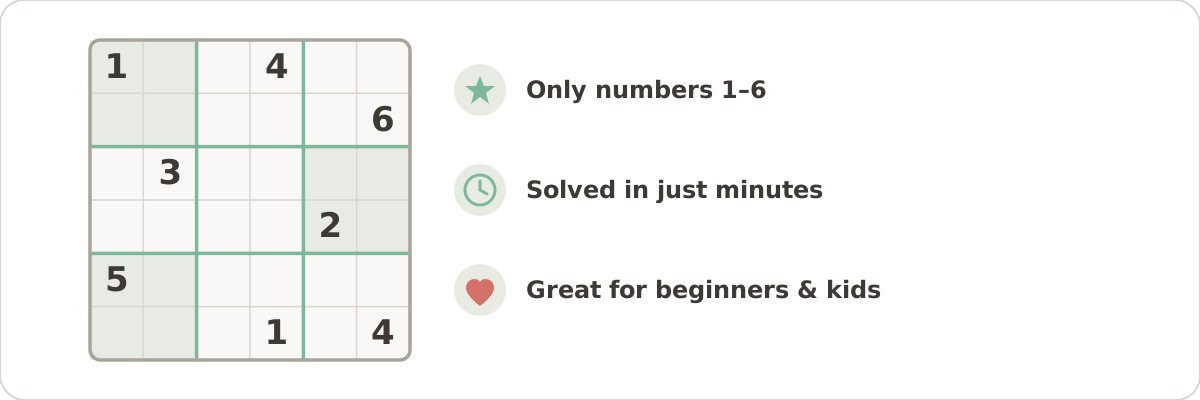
Why Mini Sudoku (6x6) Is the Perfect Starting Point
Why the smaller grid is the easiest way into Sudoku for beginners and kids alike.
Read more
The History of Sudoku: From Newspaper Puzzle to Daily Habit
How a 1970s number-placement puzzle became a worldwide daily ritual.
Read more