
Mini Sudoku Rules: The Complete 6x6 Beginner's Guide
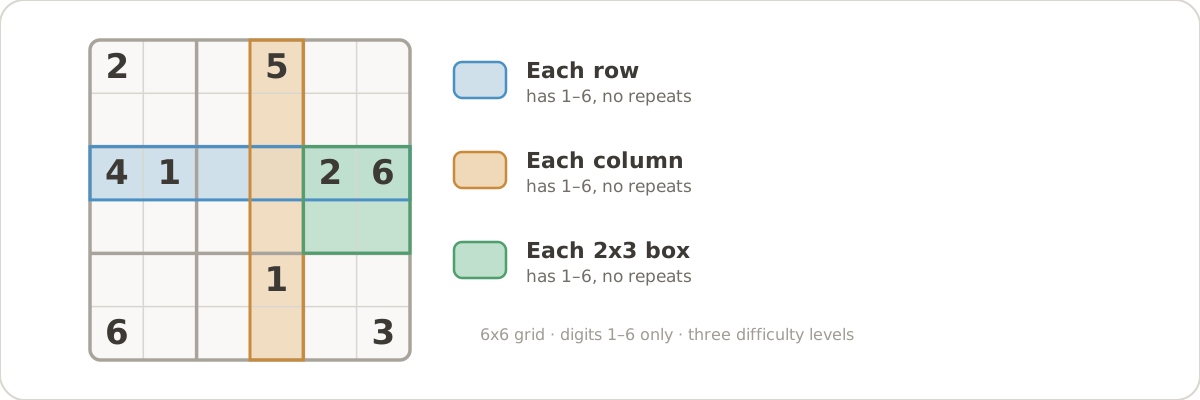
Mini Sudoku takes the exact logic of Classic Sudoku and scales it down to a 6x6 grid, which makes it the fastest way to actually learn how Sudoku works. There's no arithmetic, no guessing, and no rule you need to memorize beyond three simple statements about rows, columns, and boxes. This guide covers every rule in plain language, walks through a real puzzle step by step, and answers the questions beginners run into most often.
The grid
A Mini Sudoku board is 6 cells wide and 6 cells tall — 36 cells in total, roughly a third the size of a Classic 9x9 grid. Those 36 cells are also split into six 2x3 boxes (two columns wide, three rows tall), each outlined with a bolder border so you can spot it at a glance. Every puzzle starts with some cells already filled in as clues; your job is to complete the rest.
The three rules
Every Sudoku variant, Mini included, comes down to one idea applied three times over. Fill the grid with the digits 1 through 6 so that:
- • Each row (reading left to right) contains 1–6 exactly once — no repeats.
- • Each column (reading top to bottom) contains 1–6 exactly once — no repeats.
- • Each 2x3 box contains 1–6 exactly once — no repeats.
All three rules apply at the same time, independently. A digit can't repeat in its row even if it's sitting in a different box; it can't repeat in its box even if it's in a different column. The puzzle is solved the moment every cell is filled and all three rules hold everywhere on the board simultaneously — and a well-formed puzzle always has exactly one solution that satisfies all of them.
What Mini Sudoku is not
It's easy to assume a number puzzle involves math, but Mini Sudoku doesn't ask you to add, subtract, or compare digit sizes anywhere. The numbers 1 through 6 are really just six distinct symbols — you could swap them for six colors or six letters and the puzzle would play identically. That's different from a variant like Killer Sudoku, where cages add a real arithmetic constraint on top of the standard rules. Mini Sudoku is pure placement logic, which is exactly why it's such a clean way to learn.
A worked example
Rules are easiest to internalize by watching them solve something. Look at the highlighted row, column, and box in the image above: the row already contains 4, 1, 2, and 6, leaving only 3 and 5 unplaced. The column already contains 5 and 1, leaving 2, 3, 4, and 6 unplaced. And the highlighted box already has 2 and 6 filled in, leaving 1, 3, 4, and 5 unplaced.
That's the entire technique beginners need for most of a puzzle: look at a row, column, or box that's nearly full, list which digits are missing, then check the empty cell's other row/column/box to see which of those missing digits is still allowed there. Once only one candidate survives all three checks for a cell, that's your answer — place it and move on to the next nearly-complete line. Puzzles get harder when fewer lines are "nearly full" at the start, which is exactly what the difficulty levels below control.
Want the full technique library, including what to do once single-candidate cells run out? Our solving techniques guide covers scanning, naked pairs, and more — all directly transferable from Mini to Classic Sudoku.
Notes (pencil marks)
When a cell has more than one possible digit left, you can toggle notes mode and tap each candidate into the cell as a small reminder, rather than trying to hold every possibility in your head. Notes are just scratch space — they don't have to follow the row/column/box rule themselves, and you can add or remove them freely as you narrow things down. Only the final digit you commit to a cell needs to satisfy the puzzle's rules. Most Easy and Medium Mini Sudoku puzzles can be solved without ever opening notes; they tend to earn their keep once you're a few moves into a Hard puzzle.
Difficulty levels
Difficulty is controlled by how many of the 36 cells are given to you as starting clues — fewer clues means more deduction before a cell becomes certain:
Easy
17 of 36 clues
Good for learning the basics
Medium
13 of 36 clues
A balanced challenge
Hard
9 of 36 clues
For experienced players
Common rule mix-ups
- • "It's in a different box, so it's fine" — it isn't, if it repeats in the same row or column. All three rules apply at once, not one at a time.
- • Confusing notes with answers — a candidate number jotted as a note isn't committed yet, and won't trigger a conflict warning the way a placed digit will.
- • Expecting a "6x6 box" — boxes in Mini Sudoku are 2 columns by 3 rows (or vice versa depending on orientation), not a 3x3 square like Classic Sudoku's boxes.
- • Treating digits as values — there's no addition or comparison involved; 6 isn't "more" than 1 for solving purposes, they're just six distinct labels.
Ready to put the rules into practice? Today's puzzle takes about two minutes on Easy.
Play Mini Sudoku TodayFrequently asked questions
What are the basic rules of Mini Sudoku?
Fill a 6x6 grid so that every row, every column, and every 2x3 box contains the digits 1 through 6 exactly once, with no repeats anywhere within any of those three groups.
Is Mini Sudoku the same as Classic Sudoku, just smaller?
Yes. The rule set is identical to Classic Sudoku, just scaled down: a 6x6 grid with 2x3 boxes and digits 1-6, instead of a 9x9 grid with 3x3 boxes and digits 1-9. Every technique you learn on Mini Sudoku carries over directly.
Does Mini Sudoku involve any math?
No. Despite using numbers, Mini Sudoku is a placement and logic puzzle, not an arithmetic one. You never add, subtract, or compare digit values — the numbers are just six distinct labels that each need to appear once per row, column, and box.
What do the Mini Sudoku difficulty levels mean?
Difficulty is set by how many of the 36 cells are pre-filled as clues: Easy starts with 17 clues, Medium with 13, and Hard with 9. Fewer starting clues means more deduction is required before you can place a number with certainty.
What's the difference between a "note" and an actual answer?
A note (or pencil mark) is a small candidate digit you jot into a cell as a reminder that it's still possible there, not a final answer. Notes don't have to obey the row/column/box rule themselves — only the final digit you commit to a cell does.
Can a number repeat in a row as long as it's in a different box?
No. All three rules apply independently and simultaneously. A digit must be unique within its row, unique within its column, and unique within its 2x3 box — being in a different box does not excuse a repeat in the same row or column.
Keep reading
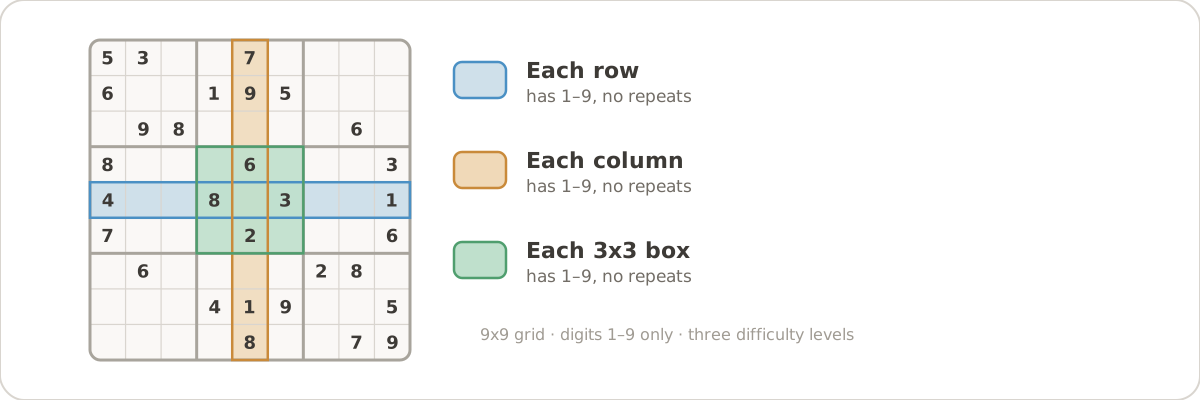
Classic Sudoku Rules: How to Play 9x9 Sudoku Step by Step
The same rules, scaled up to 9x9 — a step-by-step guide with a worked example.
Read more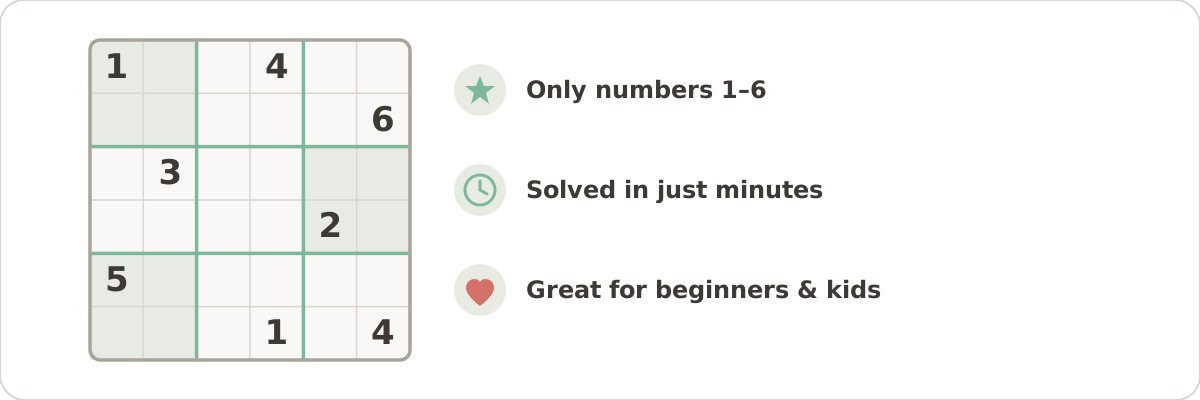
Why Mini Sudoku (6x6) Is the Perfect Starting Point for Beginners and Kids
Why the smaller grid is the easiest way into Sudoku for beginners and kids alike.
Read more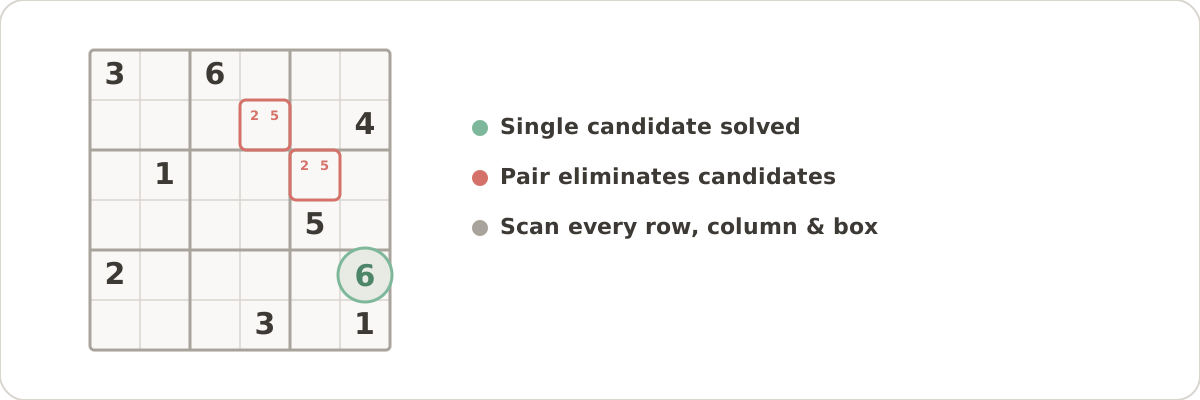
Sudoku Solving Techniques: A Complete Guide From Beginner to Advanced
The techniques that actually solve puzzles, from basic scanning to the X-Wing.
Read more
Mini vs Classic vs Killer vs Jigsaw vs Samurai Sudoku: Which Should You Play?
A side-by-side comparison of every Sudoku variant we offer.
Read more