
Why Mini Sudoku (6x6) Is the Perfect Starting Point for Beginners and Kids
A blank 9x9 Sudoku grid is genuinely intimidating the first time you see one — 81 cells, nine overlapping constraints to track, and a difficulty curve that punishes small mistakes. That's a rough on-ramp for a beginner or a child, and it's a big reason people bounce off Sudoku before giving it a real chance. A 6x6 grid solves that problem almost by accident — same rules, same skills, a fraction of the working memory required. Here's exactly why that scaling-down works, how to actually introduce it to a child, and what age is realistic to start.
Same logic, a third of the board
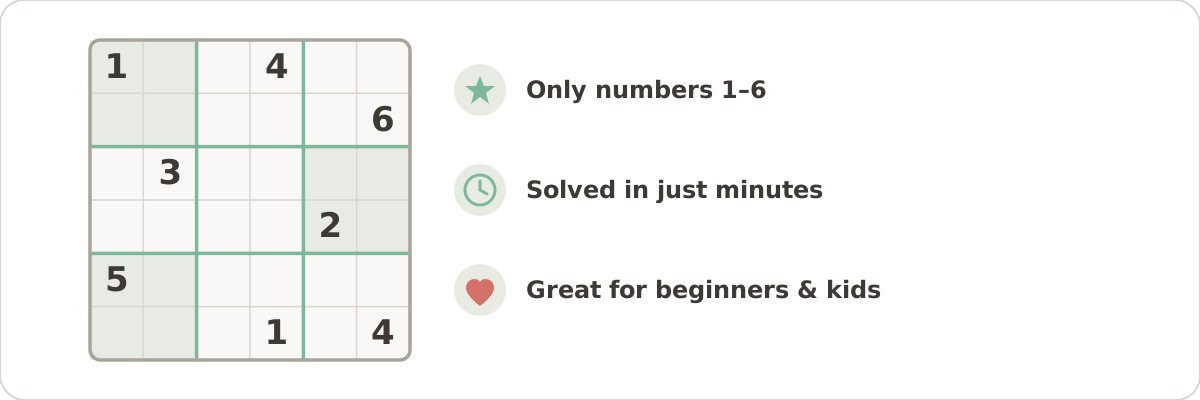
Mini Sudoku uses numbers 1–6 in a 6x6 grid split into six 2x3 boxes — the identical rule set as full-size Sudoku (one of each number per row, column, and box), just with 36 cells instead of 81. That means every technique a new player needs to learn — scanning, single candidates, basic elimination — is learnable in a puzzle you can actually finish in a few minutes, instead of getting lost halfway through a 9x9 grid.
In practice, a beginner's first real move looks like this: scan a row that already has four of its six numbers filled in, notice only two cells are empty, and work out which of the two remaining numbers goes where by checking the column and box each empty cell belongs to. That's the entire foundation of Sudoku — a 6x6 grid just gets a new player to that "aha" moment in their first puzzle instead of their tenth.
Mistakes are easy to see and fix
With fewer cells, a wrong guess is much easier to trace back to its cause. A beginner staring at a 9x9 grid with a conflict somewhere often can't tell where the logic broke down; on a 6x6 grid, the same mistake is usually visible at a glance. Our version also highlights conflicting cells the moment they happen, so a wrong entry gets caught immediately instead of quietly compounding into a dead end ten moves later. That short feedback loop — try something, see the result, understand why — is exactly how people learn best, and it's much harder to get on a bigger board.
It's genuinely good for kids
For children who already know their numbers 1 through 6, Mini Sudoku is a logic puzzle wearing the disguise of a number game — there's no reading required, no arithmetic beyond counting, and the "rules" are really just "don't repeat a number in this row, column, or box." Teachers often reach for puzzles like this in early math education for exactly that reason: process-of-elimination thinking is easier to pick up by doing than by being told, and a child either figures it out through trial and error or absorbs it by watching a parent solve one. That makes it approachable well before kids are ready for the working-memory demands of a full 9x9 puzzle, and it builds exactly the kind of systematic, rule-following thinking that transfers to schoolwork and other logic games.
What age is right to start?
There's no strict cutoff, but a good rule of thumb is: if a child can reliably count to six and understands the idea of "don't repeat," they're ready to try — usually somewhere around age 5 to 7, though it varies a lot by kid. Start on the easiest difficulty and expect to sit with them for the first few puzzles. The goal early on isn't independent solving; it's understanding why a move works, which is a lot easier to explain out loud on a small grid than a 9x9 one where the reasoning chain is longer.
How to actually introduce it to a child
A few things that make the first few puzzles go smoothly:
- • Start on Easy and solve the first one together out loud, narrating each deduction rather than just filling in the answer for them.
- • Ask "which numbers are missing here?" before asking "what goes in this cell?" — it separates the two skills instead of expecting both at once.
- • If you'd rather keep a young child off a screen entirely, our printable Sudoku page generates a 6x6 grid you can print at home.
- • Don't rush toward pencil marks or note-taking. On a 6x6 grid most kids can hold the missing candidates in their head, which becomes useful preparation for when a 9x9 grid actually requires writing them down.
A real bridge to Classic Sudoku
Mini Sudoku isn't a "kiddie version" that teaches bad habits — every technique that solves a 6x6 grid (see our solving techniques guide) applies directly to Classic Sudoku and beyond. Once scanning and single candidates feel automatic on a 6x6 board, stepping up to 9x9 is mostly a matter of scale, not a new skill set. It's the same reason chess players start on smaller tactical puzzles before tackling full games — the fundamentals transfer, the complexity doesn't have to be learned all at once. When they're ready to see what comes after Classic, our variant comparison guide covers where to go next.
Ready to try it? Today's puzzle takes about two minutes on Easy.
Play Mini Sudoku TodayFrequently asked questions
What age can kids start playing Mini Sudoku?
There's no strict cutoff, but a good rule of thumb is age 5-7: if a child can reliably count to six and understands the idea of "don't repeat," they're ready to try, with a parent sitting alongside them for the first few puzzles.
Is Mini Sudoku too easy for adults?
No. It's a great learning tool, but Hard-tier 6x6 puzzles still require naked pairs and careful scanning, and plenty of experienced solvers use it as a quick warm-up or coffee-break puzzle rather than only a kids' format.
Do I need pencil marks for Mini Sudoku?
Usually not. Most Easy and Medium puzzles can be solved through scanning and naked singles alone; pencil marks (candidate notes) tend to start mattering once you reach Hard difficulty.
What's the difference between Mini Sudoku and Classic Sudoku besides size?
Mostly scale: 6x6 with 2x3 boxes and digits 1-6 versus 9x9 with 3x3 boxes and digits 1-9. The rules and the core solving techniques are identical, which is why Mini Sudoku transfers directly into Classic Sudoku skill.
How long does a Mini Sudoku puzzle take?
A few minutes on Easy for most players, stretching to somewhere around 10-15 minutes on Hard depending on experience — much shorter than a comparable 9x9 puzzle simply because there's a third as many cells to track.
Should kids play Sudoku on a screen or on paper?
Either works. A screen version that highlights conflicting cells immediately can speed up learning by catching mistakes right away, while a printed grid is a good screen-free option for younger children.
Keep reading
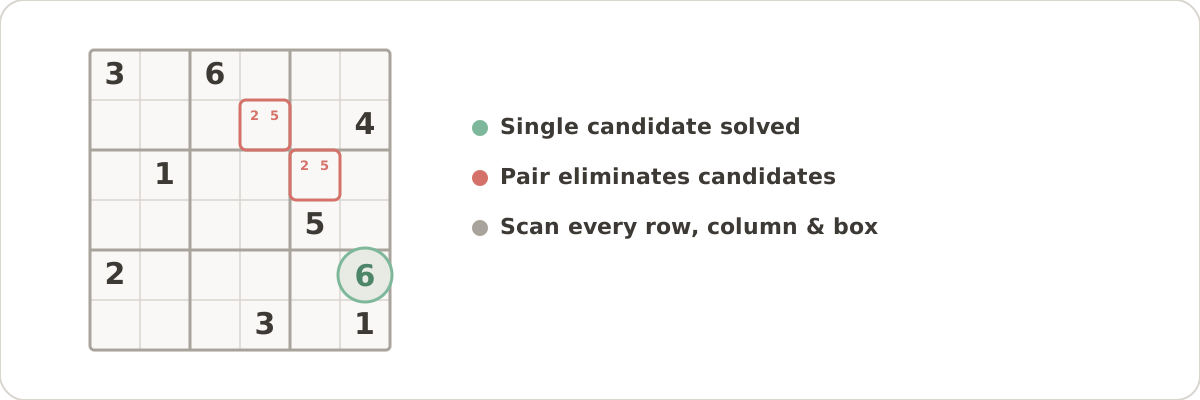
Sudoku Solving Techniques: A Complete Guide From Beginner to Advanced
The techniques that actually solve puzzles, from basic scanning to the X-Wing.
Read more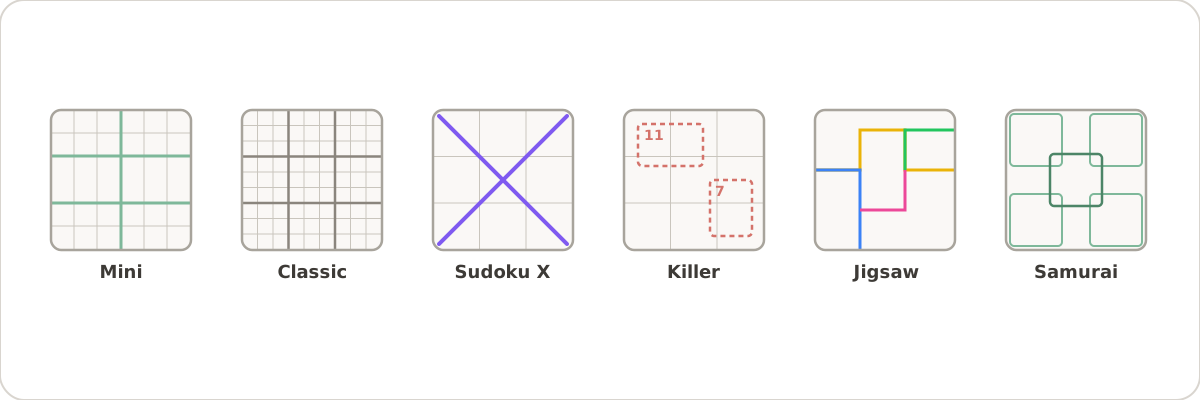
Mini vs Classic vs Killer vs Jigsaw vs Samurai Sudoku: Which Should You Play?
A side-by-side comparison of every Sudoku variant we offer.
Read more
The Benefits of Playing Sudoku Every Day
What a daily puzzle habit actually does for your focus, memory, and stress levels.
Read more
The History of Sudoku: From Newspaper Puzzle to Daily Habit
How a 1970s number-placement puzzle became a worldwide daily ritual.
Read more